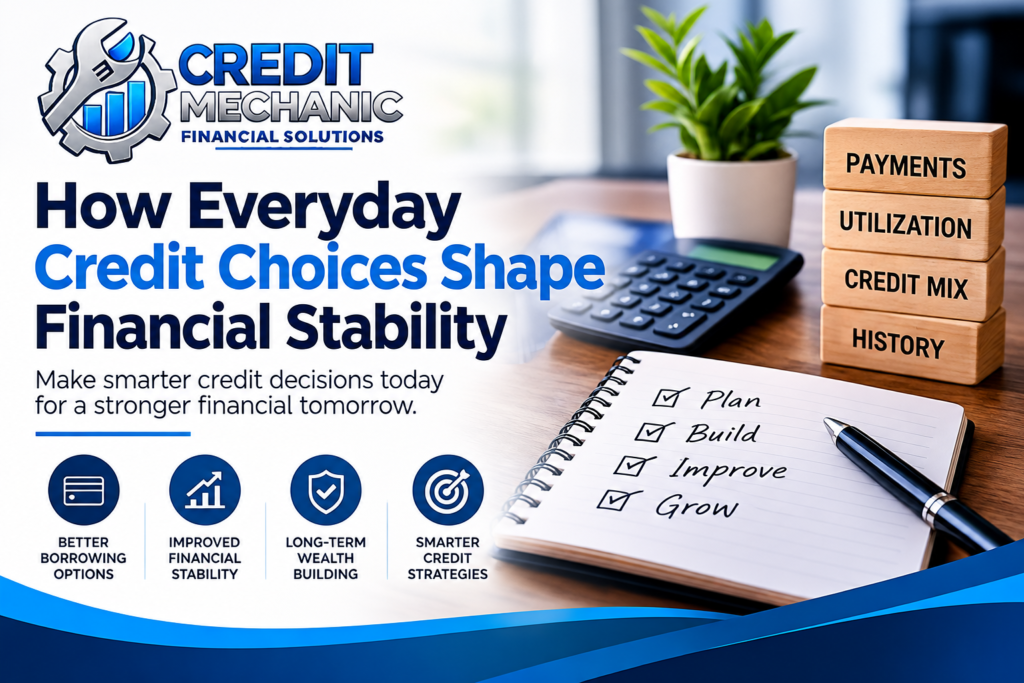
Credit decisions are often treated as isolated events. Someone applies for a credit card, finances a vehicle, co-signs a loan, or pays down a balance without considering how that decision may affect other financial plans. Over time, these choices can influence borrowing options, monthly cash flow, and financial flexibility.
Understanding how everyday credit activity affects long-term financial stability helps consumers make more informed decisions. Instead of focusing exclusively on a credit score, consider your outstanding debts, payment habits, available credit, and future financial commitments.
Credit Is More Than a Three-Digit Number
A credit score summarizes information in a credit file, but it does not represent someone’s complete financial health. Lenders may evaluate payment history, outstanding balances, account age, credit mix, and recent applications.
Your credit report provides additional context. It contains information about open and closed accounts, payment statuses, reported balances, inquiries, and collection accounts.
Reviewing reports from the nationwide credit reporting agencies can help you identify incorrect balances, unfamiliar accounts, or inaccurate payment information. Addressing reporting concerns early can prevent misunderstandings when applying for financing.
Consider the Full Cost Before Borrowing
A low monthly payment can make borrowing appear affordable, but the payment is only one part of the overall cost. Interest rates, fees, repayment periods, and other expenses should also influence your decision.
Before accepting financing, compare the annual percentage rate, total repayment amount, and loan terms. Consider whether the payment would remain manageable if your income decreased or unexpected expenses occurred.
For households managing multiple financial obligations, debt and budget coaching can help organize expenses, establish repayment priorities, and develop a realistic financial plan.
Manage Credit Utilization and Payment History
Credit utilization measures how much revolving credit you are using compared with your available limits. For example, a $900 balance on a card with a $3,000 limit represents 30% utilization.
Lower reported balances are generally viewed more favorably by many scoring models. However, no particular percentage guarantees a specific credit score.
Payment history is another important consideration. Setting automatic payments or calendar reminders can help prevent missed due dates. Paying statement balances in full when possible can also help avoid unnecessary interest charges.
Building responsible habits is more sustainable than relying on quick credit improvement strategies.
Understand Applications and Shared Accounts
Applying for multiple credit accounts within a short period may generate several hard inquiries. These inquiries can influence your credit score, although certain scoring models group qualifying rate-shopping inquiries for specific loan types.
Co-signing loans also involves financial responsibility. A co-signer may become responsible for repayment if the primary borrower fails to make payments. Missed payments can affect both individuals’ credit histories.
Authorized-user accounts require similar consideration. Before joining an account, understand the primary account holder’s payment habits, outstanding balances, and reporting practices. Explore authorized user tradeline guidance to understand the potential benefits and limitations. Being added to an account does not guarantee a score increase.
Protect Your Credit Information
Financial stability also depends on protecting personal information. Review account statements regularly, use strong passwords, and enable multifactor authentication whenever available.
Unfamiliar accounts, unexpected inquiries, or suspicious transactions deserve attention. Contact the relevant financial institution and credit reporting agency to understand your options.
Identity theft help and resources can help consumers understand common warning signs, available protection measures, and possible recovery options.
Connect Credit Decisions With Financial Goals
Your credit priorities may change as your circumstances evolve. Someone preparing to purchase a home may need to evaluate existing debts, payment history, and financial readiness before applying for a mortgage. Homebuyer credit preparation provides guidance on understanding these considerations.
Business owners may have different concerns, including establishing business credit and understanding the relationship between personal and business financial obligations. Business credit coaching can help clarify these considerations.
Individuals with limited credit histories or previous financial difficulties can also benefit from learning about responsible credit-building options.
When inaccurate or incomplete information appears on a credit report, consumers have the right to review and dispute it. A partner credit repair program may also be an option when additional assistance is appropriate. Results and timelines vary, and no particular score improvement can be guaranteed.
Make Informed Decisions Before You Sign
A strong financial plan starts with understanding your current position. Review your credit reports, organize outstanding obligations, evaluate your budget, and identify your next financial objective.
Avoid making decisions based solely on promotional offers or promises of immediate results. Instead, compare available options and understand their costs and responsibilities.
Credit Mechanic Financial Solutions helps individuals understand their credit information and explore options suited to their circumstances. Through a credit consultation, you can discuss your financial concerns, understand relevant credit factors, and explore possible next steps.
Visit Credit Mechanic Financial Solutions to learn more about available guidance, or contact the team to arrange a conversation.
Ultimately, credit management is about making informed financial decisions rather than chasing a particular number. Understanding your responsibilities today can help you approach tomorrow’s financial opportunities with greater confidence.