When you owe money on several accounts at once, the hardest part is often deciding where to start. Do you throw extra cash at the card with the highest interest rate, or at the smallest balance so you can cross something off the list? Both approaches have loyal fans, and both can work.
This guide explains the two best-known repayment strategies, the debt snowball and the debt avalanche, in plain language. You will see how each works, where each shines, and how to choose one that fits your budget and your personality. This is general education, not personal financial advice, so use it as a starting point for your own plan.
Before You Pick a Method: Know What You Owe
Neither strategy works well without a clear picture of your debts. Before choosing, make a simple list with these details for each account:
- The name of the lender or card
- The current balance
- The interest rate (APR)
- The minimum monthly payment
- The due date
Seeing everything in one place often reveals surprises, such as a small balance you forgot about or a rate higher than you expected. It also shows how much of your monthly budget is already committed to minimum payments.
How the Debt Snowball Works
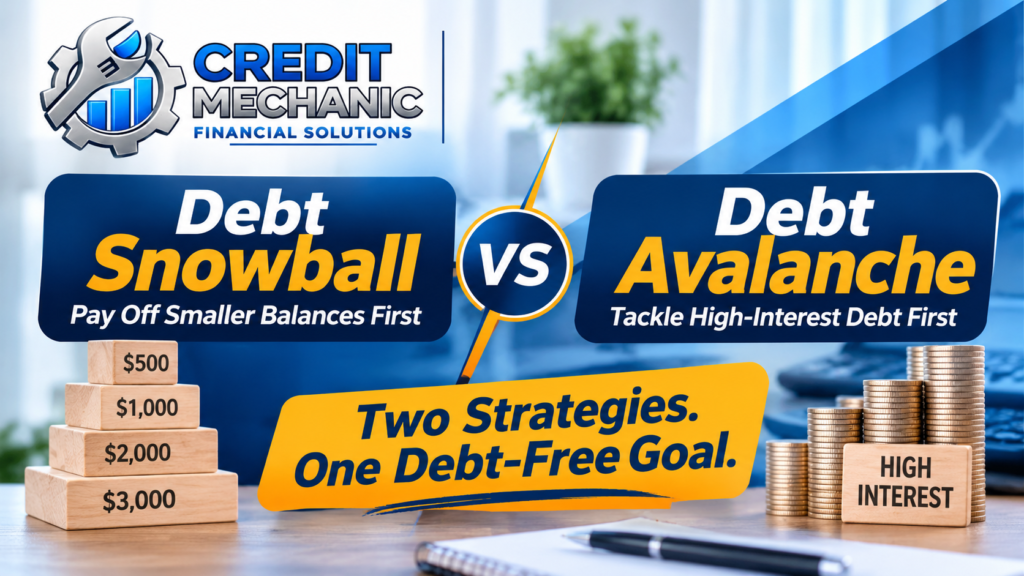
With the snowball method, you list your debts from the smallest balance to the largest, ignoring the interest rate. Then you follow these steps:
- Pay the minimum on every debt.
- Put every extra dollar you can toward the smallest balance.
- When that debt is paid off, take the money you were paying on it and add it to the next smallest debt.
- Repeat until all debts are gone.
The idea is that each paid-off account gives you a quick win and frees up a payment that rolls into the next one, like a snowball growing as it rolls downhill.
Where the snowball shines: It is built for motivation. Closing accounts early can make the process feel real, and that can help people stay consistent. It also reduces the number of bills you manage as accounts disappear.
The trade-off: Because it ignores interest rates, you may pay more interest overall than you would with another approach, especially if your largest balances carry the highest rates.
How the Debt Avalanche Works
With the avalanche method, you list your debts from the highest interest rate to the lowest, regardless of balance. The steps are similar:
- Pay the minimum on every debt.
- Put every extra dollar toward the debt with the highest interest rate.
- When it is paid off, move that payment to the debt with the next highest rate.
- Continue until you are debt-free.
The idea is to target the most expensive debt first so less of your money goes to interest over time.
Where the avalanche shines: On paper, it usually costs the least in total interest because you attack the costliest debt first.
The trade-off: If your highest-rate debt also has a large balance, it can take a long time before you see your first account paid off. Some people find that discouraging and give up before the savings add up.
Snowball vs. Avalanche at a Glance
- Order of payoff: Snowball goes by smallest balance. Avalanche goes by highest interest rate.
- Main benefit: Snowball offers faster early wins. Avalanche usually reduces total interest.
- Main risk: Snowballs may cost more in interest. Avalanche may feel slow at the start.
- Best for: Snowball suits people who need momentum. Avalanche suits people who are motivated by numbers and long-term savings.
How to Choose Between Them
There is no single right answer, and the best method is the one you will actually stick with. A few questions can help you decide:
- Do you get discouraged easily? If so, early wins from the snowball may help you stay on track.
- Is one of your debts carrying a very high interest rate? The avalanche may be worth a closer look.
- Are your balances close in size? If they are, the difference between the two methods may be small.
- Do you have many small debts? The snowball can clear your list faster and simplify your monthly bills.
Some people combine the two: they start with a small balance for a quick win, then switch to the highest rate first. The goal is progress you can maintain.
Neither Method Works Without a Budget
Both strategies depend on having extra money to put toward debt each month, and that comes from your budget. A realistic budget shows how much comes in, where it goes, and where you can trim.
Helpful starting points include:
- Track every expense for a month to see where money actually goes.
- Separate fixed bills from flexible spending.
- Set a small, realistic amount to direct toward debt each month.
- Build a small cushion so a surprise expense does not send you back to your credit cards.
If budgeting feels overwhelming, our debt and budget coaching is designed to help you organize income, bills, and repayment priorities in a way that fits your life.
Common Mistakes That Slow Progress
Even a good plan can stall if these habits creep in:
- Skipping the minimum payment on one account while focusing on another.
- Adding new debt while you are paying down the old balances.
- Setting a budget that is too tight to maintain for more than a month or two.
- Not planning for irregular expenses, such as car repairs, holidays, or annual fees.
- Giving up after one setback. A bad month does not erase your progress.
The holiday season in particular can strain a budget. Planning gift and travel spending ahead of time helps keep your payoff plan intact.
How Debt Payoff Connects to Your Credit
Paying down balances and paying on time are both closely tied to your credit over the long run. If you are not sure what is on your credit reports or how your debts are affecting them, a credit consultation can help you review where you stand. And if you are starting with little or no credit history, learn how credit building works so you can plan your next steps. Planning a home purchase down the road? Our homebuyer credit prep can help you understand what lenders look for.
What About Debt Consolidation and Other Options?
Snowball and avalanche are do-it-yourself strategies, and they are not the only choices. Some people explore nonprofit credit counseling, debt management programs, or debt consolidation, which generally means combining several debts into one new arrangement. Each option works differently, and the right one depends on your balances, income, and goals. Take time to compare them before you commit to anything.
When It Helps to Talk to a Coach
If you have tried to make a plan and keep getting stuck, outside guidance can help. A coach can review your income and debts with you, build a monthly budget, and help you set repayment priorities that fit your situation. In coaching sessions, it helps to bring your monthly income, household expenses, credit card balances, and regular payments, so you have a clear picture to work from.
Get Debt Coaching With Credit Mechanic Financial Solutions
Choosing between snowball and avalanche is only the beginning. The real progress comes from having a budget you can follow and a plan you believe in.
If you want help building one, Credit Mechanic Financial Solutions offers Debt Coaching in Columbus, MS with practical budget planning and personalized payoff strategies. Contact Credit Mechanic Financial Solutions at (662) 346-6118 or book your credit check-up to talk through your goals.